
Solutions / Air-Go Health Watch
WardThe vital signs of the whole ward, on one screen
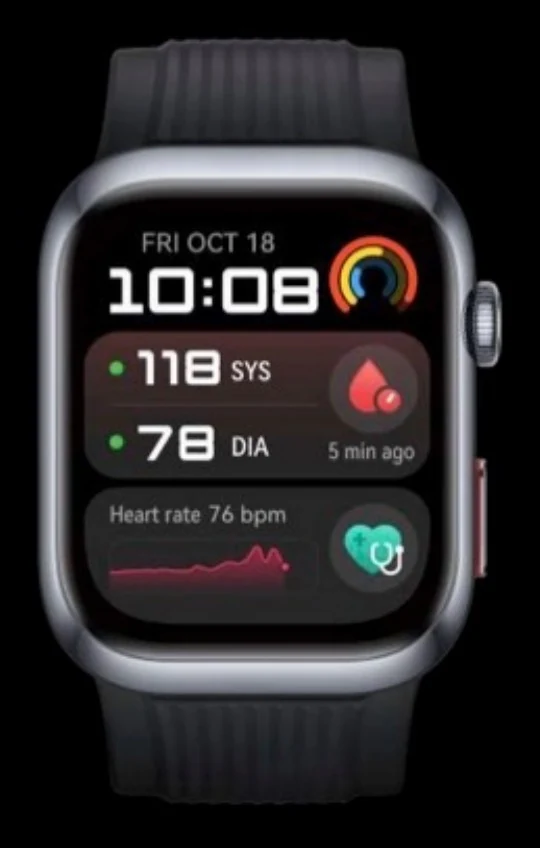
Patients wear a HUAWEI WATCH D2. Its measurements reach a central platform from which doctors set thresholds and review the history, and the alerts reach the nurses’ mobile phones.
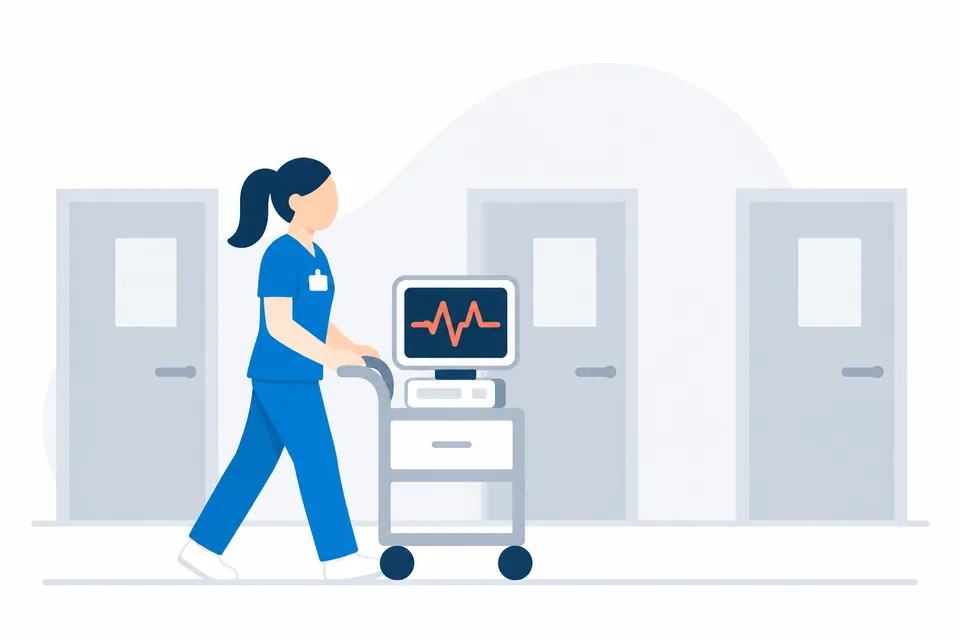
Between one round and the next, nobody is watching
Vital signs are taken every few hours, bed by bed, and written down afterwards. What happens between two rounds is not recorded anywhere.
How it works
Assign the watch
It is assigned to the patient on admission and removed at discharge. Each measurement is recorded against whoever was wearing the watch at that moment.
Measure from the wrist
Heart rate every minute; oxygen saturation and skin temperature periodically; blood pressure on a schedule or on demand.
See the ward
One card per patient, in bed order, with their latest values. Also in ward display mode.
The doctor’s thresholds
Those for heart rate and oxygen saturation are set by a doctor. The alert is raised by the watch and reaches the platform and the mobile phone.
The watch and the platform
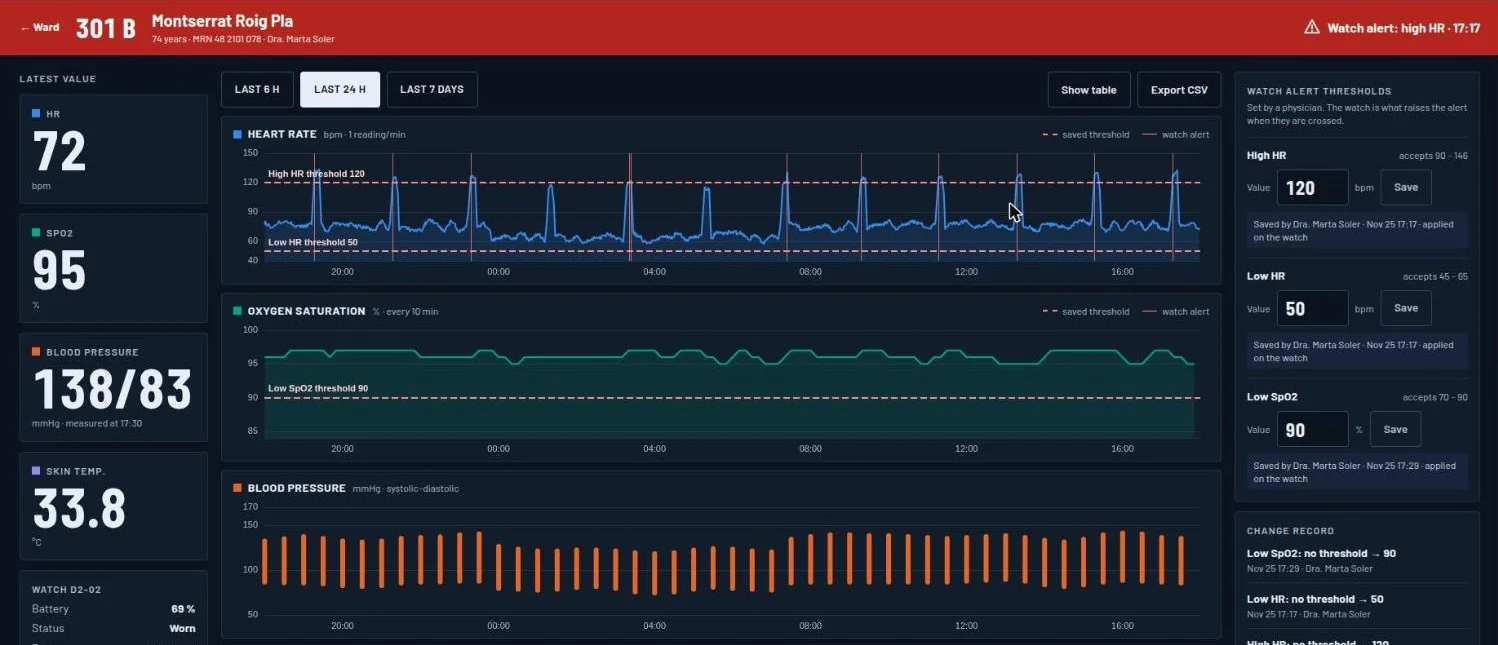
What you see on screen
Illustrative interface with made-up data.
What is included
Ward dashboard
Each patient’s latest values and their last six hours of heart rate. In red, the alerts from the watch; in amber, the watches that need checking.
Control by the doctor
Thresholds per patient, with a record of who saved them and when they reached the watch.
Alerts in the nursing app
The alerts from the watch reach the Air-Go Care app with the patient and their bed, so that nobody has to be at the nurses’ station to see them.
Blood pressure without carrying a cuff around
The watch strap has an inflatable cuff built in. The reading is scheduled or requested from the nurses’ station.
Manufacturer’s certification
The watch’s blood pressure measurement has medical device certification from its manufacturer.
History and reports
For 7, 14 or 30 days: range and median for each day, readings outside the threshold and alerts, with data export.
What is missing is shown as missing
A while without the watch is a gap in the chart, not an invented line.
What each role gets
Nursing supervisors
- You see the whole ward from the nurses’ station.
- You receive the alerts on your mobile phone.
- You request a blood pressure reading without going to the room.
Management
- Measurements between one round and the next, with no cables or equipment at the bedside.
- An objective history of each admission.
- The clinical criteria are set by the doctor, not by the system.
CIO and IT
- Uses Huawei AirEngine Wi-Fi access points; no bedside gateways.
- In your data centre or in the cloud you choose, in containers.
- Only device identifiers travel over the watch network; the names stay on the platform.
Frequently asked questions
- Which vital signs does it measure, and how often?
- Heart rate every minute, oxygen saturation and skin temperature periodically, and blood pressure on a schedule or on demand, with the cuff built into the watch strap.
- What infrastructure does it need?
- Huawei AirEngine Wi-Fi access points, which the watch connects to via Bluetooth. No bedside gateways are needed and it does not depend on any mobile phone.
- Does the platform generate alarms?
- No. It shows the measurements and the alerts from the watch itself, with the heart rate and oxygen saturation thresholds set by a doctor. It does not generate diagnoses or replace bedside monitoring.
- Where is the data stored?
- In the hospital’s data centre or in the cloud the centre chooses. Only device identifiers travel over the watch network; the names stay on the platform.
Integration and privacy
- The watch connects via Bluetooth to the centre’s Wi-Fi access points; it does not depend on any mobile phone.
- If the platform is unavailable, the gateway stores the readings and delivers them in order when it comes back.
- Doctor, nursing, technician and administration profiles; interface in Spanish, Catalan and English.
- The platform shows the measurements and the alerts from the watch itself. It does not generate diagnoses and does not replace bedside monitoring.
Other solutions
Shall we look at it with your data and your spaces?
Tell us what you want to solve and we will prepare a tailored demonstration.