
Technology and trust
We are always asked three things: where the data is, who decides, and where to start. Inside the centre, always a person, and with one specific problem.
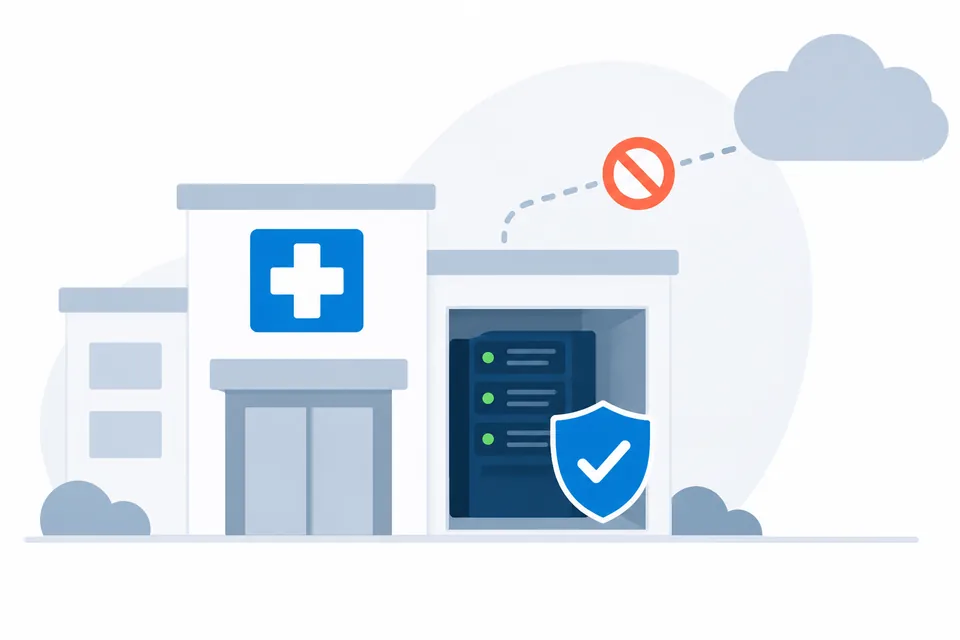
How we work
On your servers
The systems are deployed in containers inside the centre. You decide what leaves and what does not.
Integration with your HIS
HL7, SOAP, REST or files, depending on what the hospital already uses. Recorded times go back to the HIS.
One location model per centre
The neural network that places each wristband is trained and calibrated for each hospital’s spaces.
Anonymise first
Where a language model is involved, names and identifiers are replaced first by a local model.
The AI proposes, the professional decides
Organisational decisions, never clinical ones. And every proposal shows where it comes from.
Remote monitoring
We watch the health of servers and devices and deploy new versions without site visits.
Devices and technology we integrate
From the sensor to the answer, every piece is chosen to work inside the centre.
BLE sensors for assets
Bluetooth tags fixed to each piece of equipment to locate it, with an alert if someone tries to pull them off.
BLE wristband sensors
Bluetooth wristbands for patients and residents, water resistant and with a replaceable battery.
BLE call buttons
Wireless call buttons: on the wristband, in the bathroom or on the unit.
Smartphones for VoIP communication
Staff phones receive the alerts and make voice-over-IP calls from the same app.
VoIP calls between phone and room
From the alert, staff call the room and talk to the patient or resident before they get there.
Wi-Fi microphone and speaker with auto-answer
In each room, connected over Wi-Fi: the call opens by itself, with nobody having to pick up.
AI cameras for fall detection
They recognise the person’s posture in the image and detect a fall without the person pressing anything.
Certified Huawei health sensor
HUAWEI WATCH D2: vital signs from the wrist, with the manufacturer’s medical-device certification for blood-pressure measurement.
GPU servers for mid-sized local models
Language models run inside the centre, to anonymise, code and draft answers without data leaving.
Inference with our own ML models
Machine-learning models we train ourselves, such as the one that turns the Bluetooth signal into the zone each wristband is in.
What stays inside and what may leave
Inside the centre
- Clinical reports
- Real names of patients and staff
- Location, anonymisation and coding models
- Everything, if you choose the 100% on-premise mode
Outside, only if you decide so
- AirgoChat questions that are already anonymised, with made-up names in place of the real ones
Where it applies
Air-Go RTLS →
Location uses a neural network trained for each hospital’s spaces.
AirgoChat →
AirgoChat replaces names on-premise. The anonymised question can be resolved in the cloud or, if you prefer, entirely on-premise.
Air-Go Alta →
Discharge reports are anonymised and coded by local models. They never leave the hospital.
Air-Go Care →
Fall detection analyses the image inside the centre.
Shall we look at it with your data and your spaces?
Tell us what you want to solve and we will prepare a tailored demonstration.